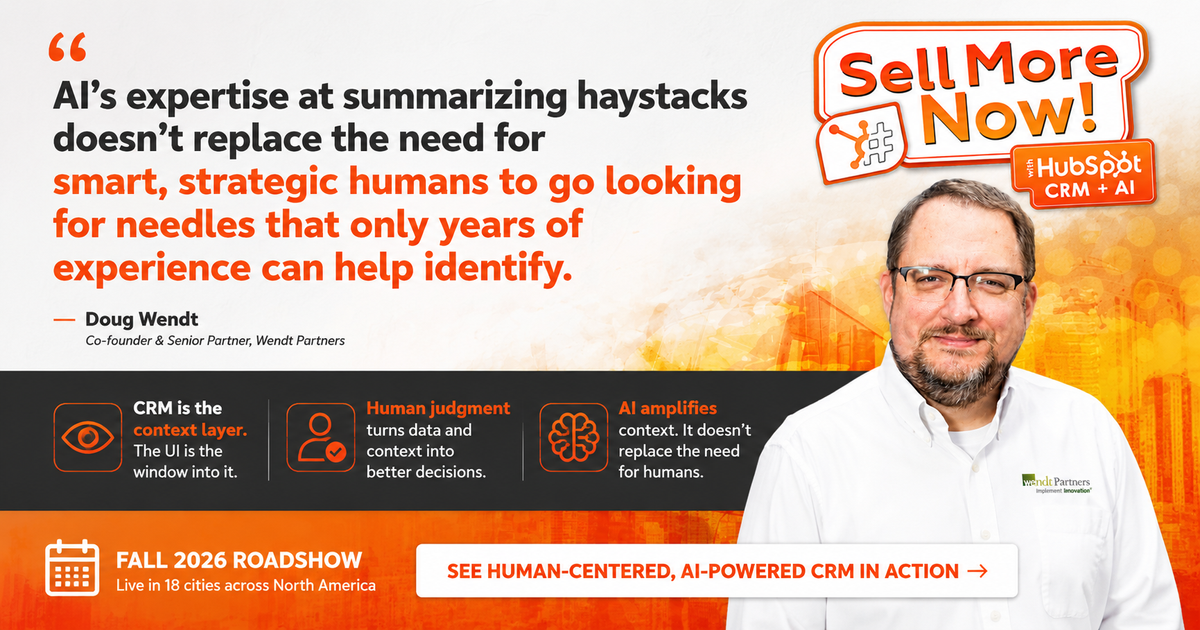
In the rapidly evolving landscape of customer relationship management (CRM), a growing chorus of voices suggests that the future lies in headless systems—where salespeople interact with data through voice or chat interfaces like Slack, Teams, or text messages, bypassing traditional screens entirely. However, Wendt Partners, a HubSpot Elite Solutions Partner, pushes back against this trend, asserting that a well-designed UI/UX is more critical than ever in the age of AI.
The company's latest announcement, issued from its Queens, New York headquarters, argues that while AI can process vast amounts of data, it is the human sales professional who must ultimately make strategic decisions. A visual CRM interface, with its structured layouts, dashboards, and contextual cues, provides the necessary framework for absorbing complex information and making informed choices. Voice or chat interfaces, by contrast, strip away this context, reducing selling to a series of transactional prompts that undermine the nuanced, relationship-building nature of B2B sales.
"The idea that salespeople will simply talk to their CRM and get everything they need is a fantasy," said Doug Wendt, founder of Wendt Partners. "AI can surface insights, but it cannot replicate the strategic thinking that comes from seeing the full picture of a customer's journey, deal history, and interactions in a visual format."
This perspective challenges the prevailing narrative that AI will render manual data entry and screen-based workflows obsolete. Instead, Wendt Partners contends that AI enhances the importance of a structured interface by sharpening the data presented to capable, human-in-the-loop professionals. The key is not to eliminate the UI but to make it smarter, more intuitive, and more aligned with how salespeople actually work.
The announcement also highlights the potential pitfalls of headless CRM, particularly in complex, enterprise environments where deals involve multiple stakeholders and long sales cycles. In such scenarios, a visual interface provides a shared reference point for teams, enabling better collaboration and alignment. It also allows for more effective training and onboarding, as new salespeople can visually explore the CRM's data and processes.
Wendt Partners' stance is not merely theoretical. The firm, which specializes in CRM strategy and optimization for complex B2B organizations, has seen firsthand how a well-implemented UI/UX can drive adoption and performance. Their approach emphasizes human-centered design, ensuring that the CRM becomes a valuable tool rather than a burden.
To further their mission, Wendt Partners is inviting interested parties to join the early access list for the "Sell More Now with HubSpot CRM + AI Fall 2026 Roadshow." This event will showcase their human-centric, AI-powered approach to CRM, demonstrating how organizations can leverage technology without losing sight of the human element in selling.
As AI continues to permeate every aspect of business, the debate over headless versus traditional interfaces will likely intensify. But Wendt Partners' clear-eyed assessment serves as a reminder that technology should augment human capabilities, not replace them. In the complex world of B2B sales, a visual, structured CRM remains an indispensable tool for driving strategic growth.