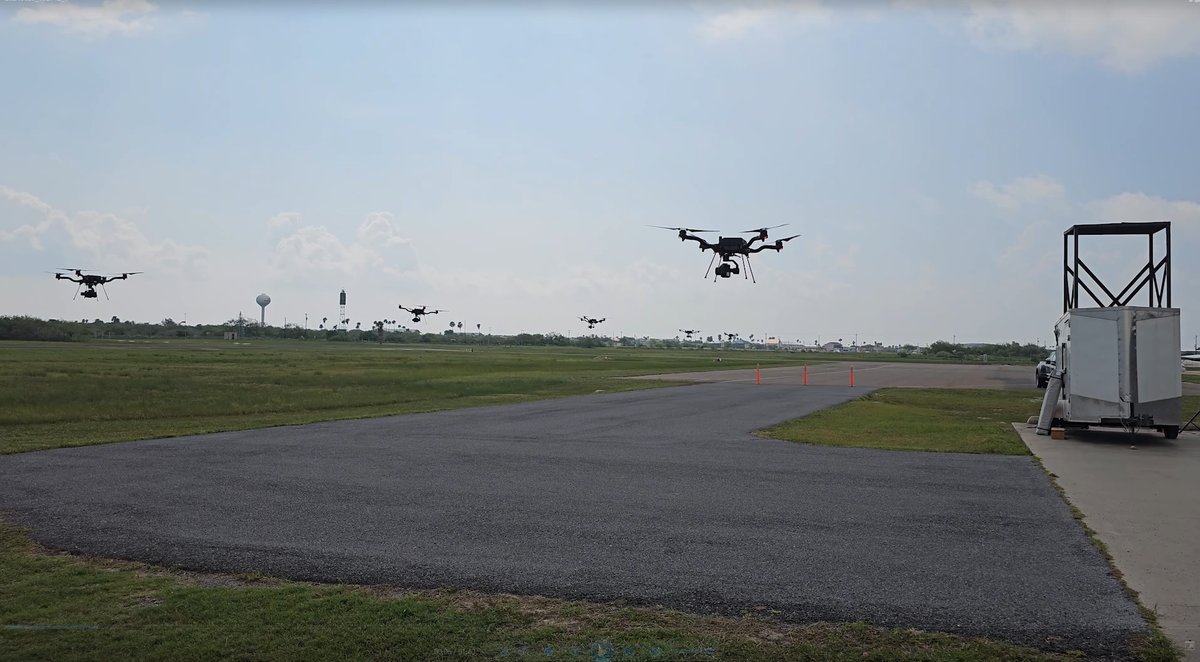
Tempest Droneworx™ has announced the launch of Corvus MRDR™ (Modular Robotics Development & Reporting), a new platform designed to streamline autonomous systems development. The Houston-based company aims to reduce the time and expense associated with testing drone algorithms, which traditionally require aircraft, crews, ranges, travel, and weather-dependent field trials.
Corvus MRDR enables developers to test their own algorithms and control methods in a simulated environment at scale, then progressively replace simulated vehicles with real ones without altering their existing workflow. This approach allows for incremental integration of physical drones in real-world coordinates, bridging the gap between virtual and physical testing. The platform leverages two key components: CROS (Corvus Robotic Operating System) and RAVN (Real-world Autonomous Vehicle Navigation), which work together to provide a seamless transition from simulation to reality.
The significance of this announcement lies in its potential to accelerate innovation in autonomous systems. By removing the logistical and financial barriers to testing, Corvus MRDR allows developers to iterate faster and bring safer, more efficient drones to market. This is particularly important for applications in public safety, where improved autonomous systems can enhance emergency response and disaster management. Additionally, the platform ensures that developers retain full ownership of their intellectual property, a critical factor for commercial and academic entities.
Tempest Droneworx, a Service-Disabled Veteran-Owned Small Business (SDVOSB), serves a diverse clientele including commercial, academic, public safety, government, and defense sectors. The company's mission is to turn autonomous systems and sensor data into real-time operational insight, and Corvus MRDR aligns with this goal by enabling more robust and reliable drone operations.
For more details, including downloadable images and bios, visit the full announcement at Newsworthy.ai. The platform's ability to preserve IP and reduce development costs could make it a key tool for the next generation of drone innovators.