Startup funding announcements regularly capture headlines with multi-million dollar rounds, soaring valuations and prominent investors. Founders outline ambitious growth plans, and venture capital firms tout their latest portfolio additions. Yet amid the celebration, a critical group is frequently overlooked: the employees whose equity compensation represents a significant portion of their potential financial future. For these workers, a funding round may signal success but can also introduce changes that affect the value and ownership percentage of their equity.
Equity compensation has evolved from a niche perk to a standard feature of employment packages in the technology sector. Employees often accept lower salaries in exchange for the chance to share in a company's growth. For some, equity can eventually outweigh years of salary, and stories of windfalls from successful IPOs or acquisitions have become part of startup culture. However, the path from receiving equity to realizing value is rarely straightforward. Many employees receive grant documents but have limited understanding of concepts such as dilution, preferred shares, liquidation preferences, secondary transactions or changing valuations. As companies stay private longer, these topics become increasingly relevant.
One of the most misunderstood aspects of startup ownership is dilution. When a company raises additional capital, it typically issues new shares to investors. Existing shareholders, including employees, may see their ownership percentage decrease. This does not automatically mean an employee's equity becomes less valuable; a significant post-funding valuation increase can enhance the economic value of a reduced ownership percentage. The challenge is that ownership percentage and company valuation can move in different directions, creating confusion for employees who lack access to detailed cap table information. Without context, it is difficult to determine whether a financing event improves or weakens an individual shareholder's position.
Another common misconception is equating valuation with accessible wealth. A startup may announce a valuation of hundreds of millions or even billions of dollars, yet employees often cannot sell their shares immediately. Most private company stock remains subject to restrictions, company policies and limited liquidity opportunities. As a result, employees can hold equity that appears highly valuable on paper but lacks a clear path to cash. This distinction between theoretical value and actual liquidity has become increasingly important as private companies delay public listings.
As employee equity becomes more prevalent, understanding ownership is evolving into a crucial skill. Employees increasingly seek answers to questions such as: How much of the company do I actually own? How does a new funding round affect my stake? What rights do different share classes carry? How should I interpret startup valuations? What options exist if I want to sell shares before an IPO? These questions are no longer limited to founders and investors; they affect engineers, product managers, designers, operators and early team members whose compensation includes company equity.
The startup ecosystem has matured considerably, but information asymmetry remains a persistent challenge. Investors often have access to extensive documentation and specialist advice, while employees may rely on fragmented information from online forums and informal discussions. Increased transparency in ownership structures, funding mechanics and equity outcomes empowers employees to make informed career and financial decisions.
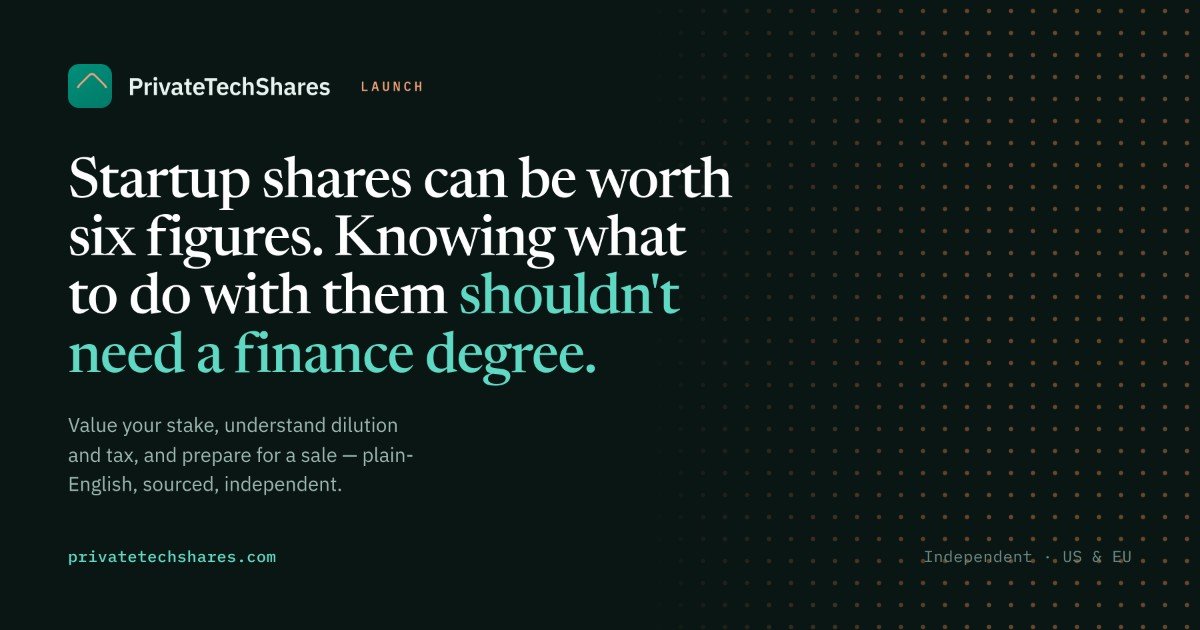
Resources such as privatetechshares.com provide independent research and educational guides on startup equity, employee ownership and private-company shares. As startup equity continues to become a mainstream form of compensation, understanding what happens behind the headlines may be just as important as the funding announcements themselves. After all, when a company raises capital, the story is not only about investors and valuations. It is also about the employees whose ownership stakes, future opportunities and long-term financial outcomes evolve with every funding round.