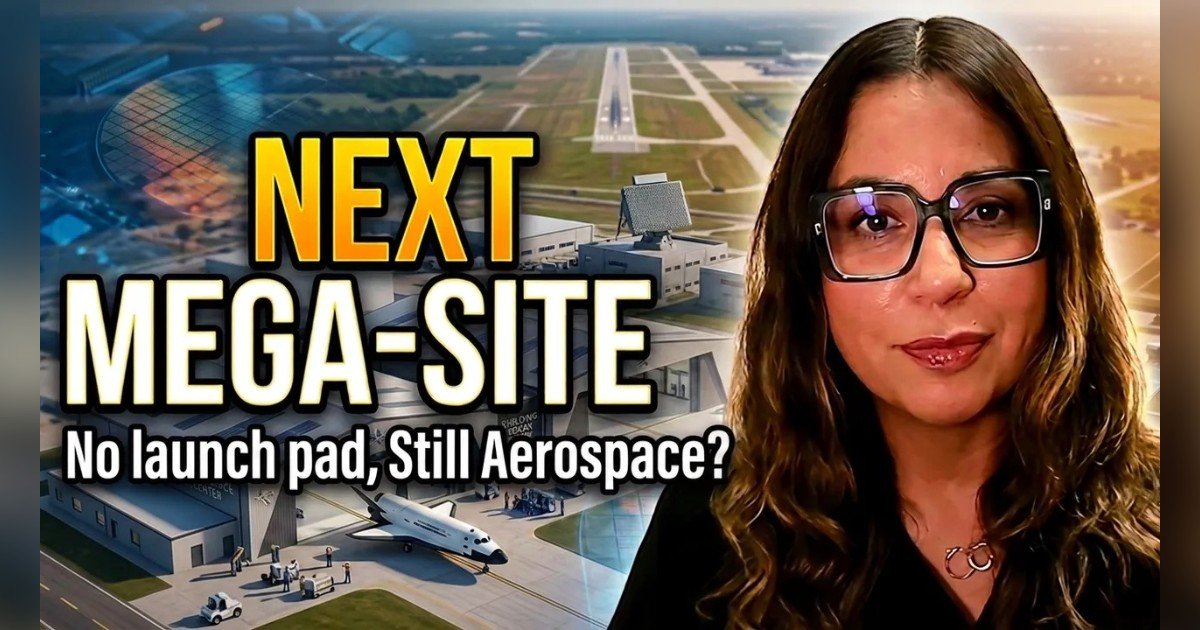
The City of San Marcos has purchased nearly 200 acres from the U.S. Department of Labor to extend the runway at San Marcos Regional Airport, a move that signals the city’s intent to become a player in the aerospace and defense sectors. The acquisition, detailed by economic development director Helen Ramirez on a recent episode of The Building Texas Show, is part of a broader strategy to leverage the region’s assets—including the adjacent 2,000-acre TriTexas mega site and Texas State University’s Star Park incubator—to attract companies focused on space intelligence, manufacturing, and defense.
The runway extension, funded by FAA and Texas Aviation grants, will enhance the airport’s capacity to serve larger aircraft and support existing tenants like Berry Aviation, now owned by publicly traded Bristow Group (NYSE: VTOL). With over 18 tenants already on-site, the airport is a proven economic engine. The extension is critical for attracting aerospace manufacturers and defense contractors that require longer runways for testing and operations. The TriTexas site, which already has regional detention and utilities in place, is rail-served and ready for development, offering a rare opportunity for large-scale industrial users.
Ramirez is clear that San Marcos is not chasing a spaceport or rocket launches. Instead, she envisions the city as a hub for the intelligence and ecosystem behind space exploration, akin to Hawthorne, California, home to Raytheon, Boeing, and Northrop Grumman. “We are looking at that future of space. It is not necessarily launching rockets,” she said. “But we can be part of the intelligence of creating that ecosystem.” This focus on the supporting infrastructure—rather than launch pads—differentiates San Marcos from other regions and aligns with its existing strengths in manufacturing and higher education.
The numbers support the pitch. A survey by Ramirez’s office of 98 companies found that over 90% were stable or growing, and about 40% were actively expanding. Epic Piping is adding 100 employees, Amazon continues to grow, and Collins Aerospace reported better business conditions in San Marcos than in California. Nabaco, a Texas State spinout that went through a Rice University accelerator, now operates in Spain but still hires Texas State graduate students. US Aviation trains active-duty Air Force cadets at the airport, and Texas State is adding a hospitality program tied to a new 130-key boutique hotel downtown.
The city’s pro-business approach is exemplified by its permitting efficiency. Ramirez’s staff has direct access to the city’s permitting software, allowing them to answer questions in real time. Texas Building Supply, on track for roughly $40 million a year in sales tax once fully ramped, receives such service without any incentive package. This responsiveness, combined with the runway extension and mega site, positions San Marcos as a compelling destination for aerospace and defense companies looking to expand in Central Texas.
For more information, watch the full episode with Helen Ramirez on YouTube: youtube.com/@thebuildingtexasshow.