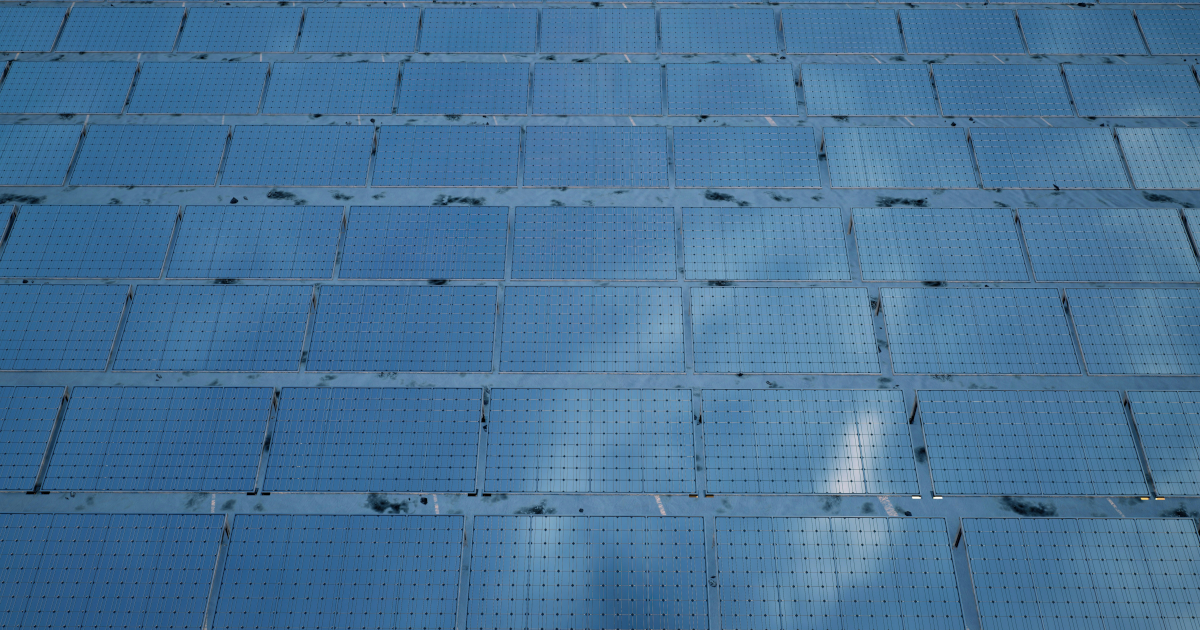
The rapid expansion of solar power across the United States is creating a land-use challenge with no simple answer. Solar requires far more land per unit of output than fossil fuel plants, making the question of where to site new capacity harder to avoid. That tension is showing up at scale as renewable buildout accelerates across the country. A coal plant can power a city from tens of acres; a solar farm generating equivalent output may need hundreds. How those questions are answered will shape who gains from the transition and who carries the environmental and social costs.
That is where firms like American Fusion Inc. (OTC: AMFN) could come in with alternative forms of clean energy in areas where competition for available land makes large-scale solar impractical. The company is developing fusion energy technology, which promises to generate substantial power with minimal land footprint. If successful, such innovations could alleviate the land-use pressures associated with solar and wind farms.
The land-use issue is becoming increasingly urgent as states and utilities set ambitious renewable energy targets. According to the U.S. Energy Information Administration, utility-scale solar capacity is expected to grow by over 20% in 2024. This growth requires vast tracts of land, often in rural areas where conflicts with agriculture, conservation, and community interests arise. For instance, large solar installations have faced opposition in states like California and New York due to concerns over farmland loss and habitat disruption.
Alternative clean energy sources like fusion, which is still in development, could offer a solution. Fusion power mimics the sun's energy production, using hydrogen isotopes as fuel and producing no greenhouse gas emissions. While commercial fusion remains years away, companies like American Fusion are working to make it a reality. The potential payoff is enormous: a single fusion plant could power a city with minimal land use and virtually unlimited fuel.
For now, the renewable energy industry must navigate the land-use conundrum. Strategies include installing solar panels on rooftops, parking lots, and brownfields, as well as co-locating solar with agriculture in "agrivoltaic" systems. However, these approaches only partially address the scale of land needed. Policymakers are also exploring updated zoning laws and incentive structures to encourage efficient land use.
The implications of this challenge extend beyond energy production. Land-use decisions affect biodiversity, water resources, and local economies. Communities that host renewable projects may benefit from jobs and tax revenue but also face changes to their landscapes. Ensuring equitable outcomes requires transparent planning and community engagement.
As the U.S. races to decarbonize its electricity grid, the tension between renewable expansion and land use will intensify. Innovations like fusion energy offer a glimpse of a future where clean power generation does not compete with other land needs. Until then, stakeholders must balance the urgent need for renewable energy with the finite nature of land resources.