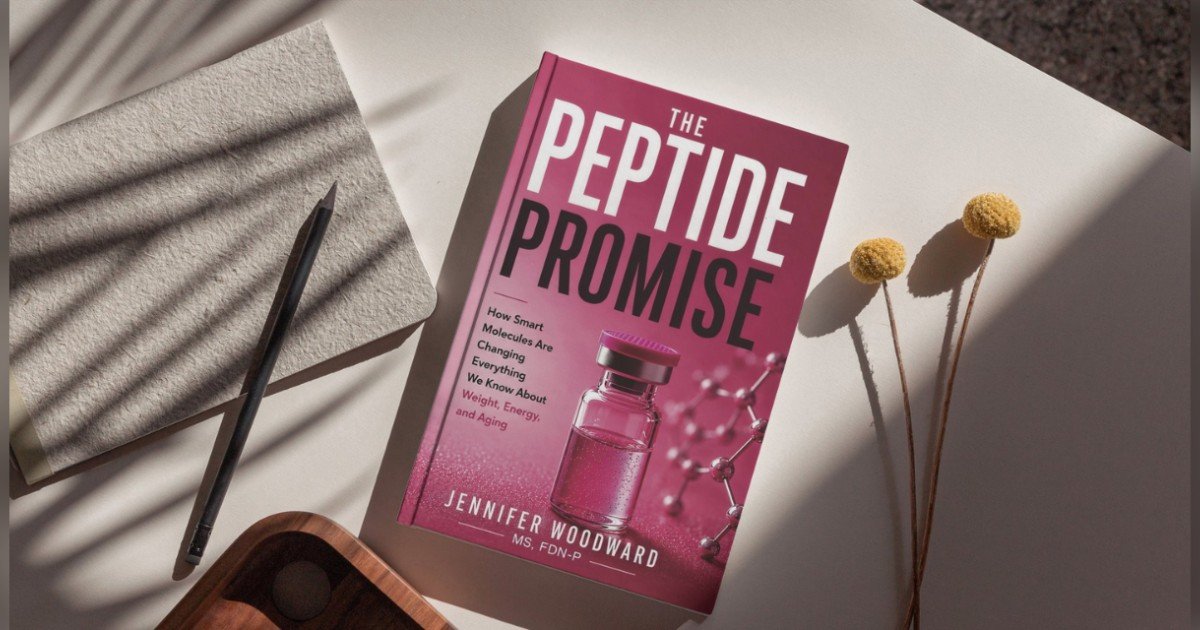
Jennifer Woodward's new book, The Peptide Promise: How Smart Molecules Are Changing Everything We Know About Weight, Energy, and Aging, arrives at a moment when peptide products are being marketed to women with growing intensity and, in Woodward's view, uneven evidence. The book is written for women who are curious about peptides, already using them, or weighing whether the investment is worthwhile, and it examines GLP-1s, metabolism, hormones, inflammation, recovery, brain health and aging.
The stakes are financial as well as physical. Woodward said she wrote the book because she was tired of watching women spend hundreds, sometimes thousands, of dollars on peptides without really understanding what they were putting into their bodies. She acknowledged the excitement surrounding peptides and said there is good reason for it, but she also pointed to a large volume of misinformation, questionable protocols and big promises that are not always backed by research. Her stated aim is to help readers distinguish research-backed applications from experimental approaches, a distinction with direct consequences for how women spend money and make health decisions.
The book opens with Woodward's own experience. At forty-one, she confronted changes in her body despite carefully managing her nutrition, exercise and daily health habits. She describes recognizing in the mirror the same confusion and frustration she had seen in women seeking her help. That moment anchors a broader conversation about what women want to know before trying another intervention: what the evidence shows, what remains uncertain and whether a given approach fits their individual needs.
Central to the book is Woodward's "Power Four": protein, minerals, circadian rhythm and movement. She presents these as the foundation of her approach regardless of whether a reader ultimately chooses to explore peptides. Woodward said she teaches the Power Four because she firmly believes those elements are the foundation of feeling good, whether or not someone decides to use peptides. The framework matters because it gives readers something actionable that does not depend on purchasing a product, and it positions peptides as one option among several rather than a default solution.
For midlife readers, the book is intended as an accessible foundation for informed discussions with healthcare professionals about body composition, muscle preservation and energy. Its focus is education, with attention to both the interest surrounding peptides and the limits of available evidence. Woodward framed the book for the woman who is curious about peptides, already using them, or wondering whether they are worth the investment, and said she wants readers to understand what is supported by research, what is still experimental and how to make informed decisions without getting swept up in the latest wellness trend.
The Peptide Promise is available for pre-order and on Kindle now, with a paperback release scheduled for November 10th, 2026. Its significance lies in the questions it raises about a fast-growing category of health products: as peptide interest expands, the difference between evidence and marketing becomes a practical concern for the women deciding what to put into their bodies.