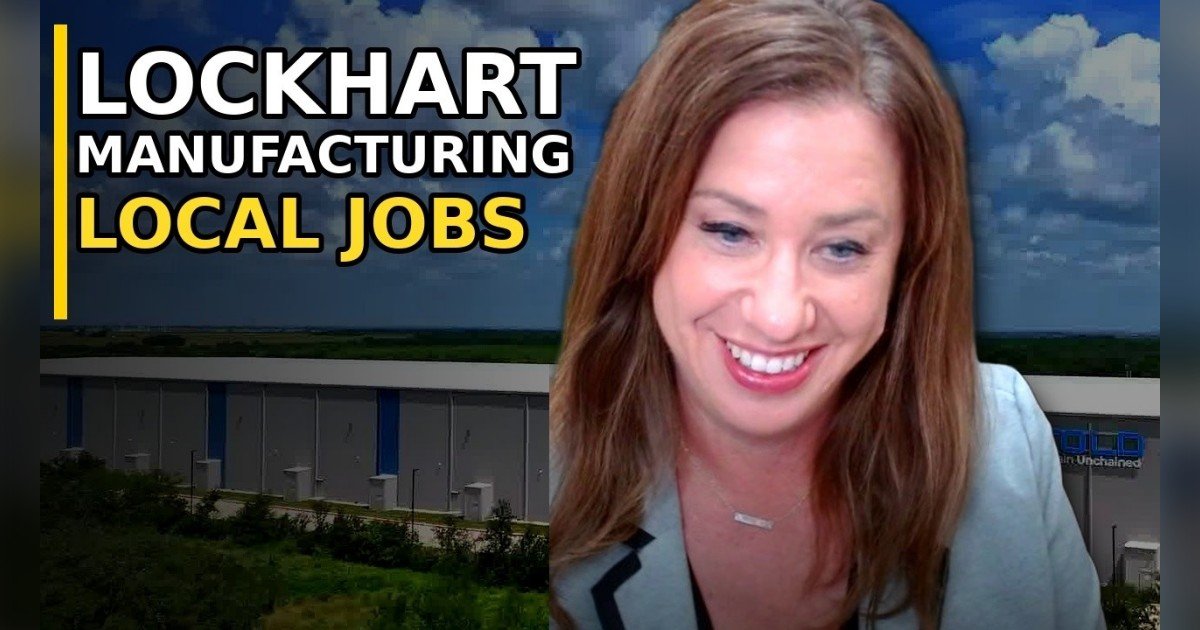
Lockhart, Texas, is emerging as a notable player in food manufacturing, with a cluster of expansions and new investments that reflect a deliberate economic development strategy. In a recent episode of The Building Texas Show, Is This Texas Town Quietly Winning the Manufacturing Race?, host Justin McKenzie spoke with Holly Malish, Director of Economic Development for the Lockhart Economic Development Corporation, about the projects and partnerships fueling the town's momentum.
The significance of these developments extends beyond Lockhart's city limits. Malish, who took the role in 2024, highlighted that major projects like Ziegenfelder and RealCold, announced before her arrival, are now in the phase of job creation and operational growth. These food manufacturers are not just adding jobs; they are diversifying the local economy and providing a foundation for supply chain resilience in the region.
Local expansions are also a key driver. Hill Country Foodworks recently moved into a newly built facility and secured a second incentive to purchase an onion slicing machine, illustrating how targeted incentives can help existing businesses scale. Malish noted that most of her recent wins stem from local companies expanding, which she sees as a powerful narrative for attracting new businesses. "Most of my most recent wins are really coming from local. They're expanding," she said, adding that helping existing companies grow is also a good story to share with prospects.
The town's appeal is further enhanced by its cultural and creative certifications. Lockhart is a Film Friendly Texas certified community and was named a Music Friendly Texas certified community. These designations signal a willingness to accommodate productions, which can spur ancillary spending in local restaurants and services. Malish emphasized that such certifications tell filmmakers, "we're willing to work with you, we're willing to assist you and make your film shoot go easy."
Regional cooperation is another pillar of Lockhart's approach. Malish described a shift away from siloed thinking, where communities refer prospects to one another based on strengths. "A win for the region is really a win for me and the city," she said, noting that even projects landing nearby affect Lockhart's workforce and schools. With limited empty buildings but ample land, Lockhart positions itself as a collaborative partner in regional growth.
Workforce development ties these efforts together. Malish highlighted a Tesla manufacturing development program run through the Boys & Girls Club, which provides social skills training, removes barriers like transportation, and moves participants through paid training at Austin Community College into Tesla's interview process. Such initiatives ensure that local residents can access the jobs being created, reinforcing the sustainability of Lockhart's industrial surge.