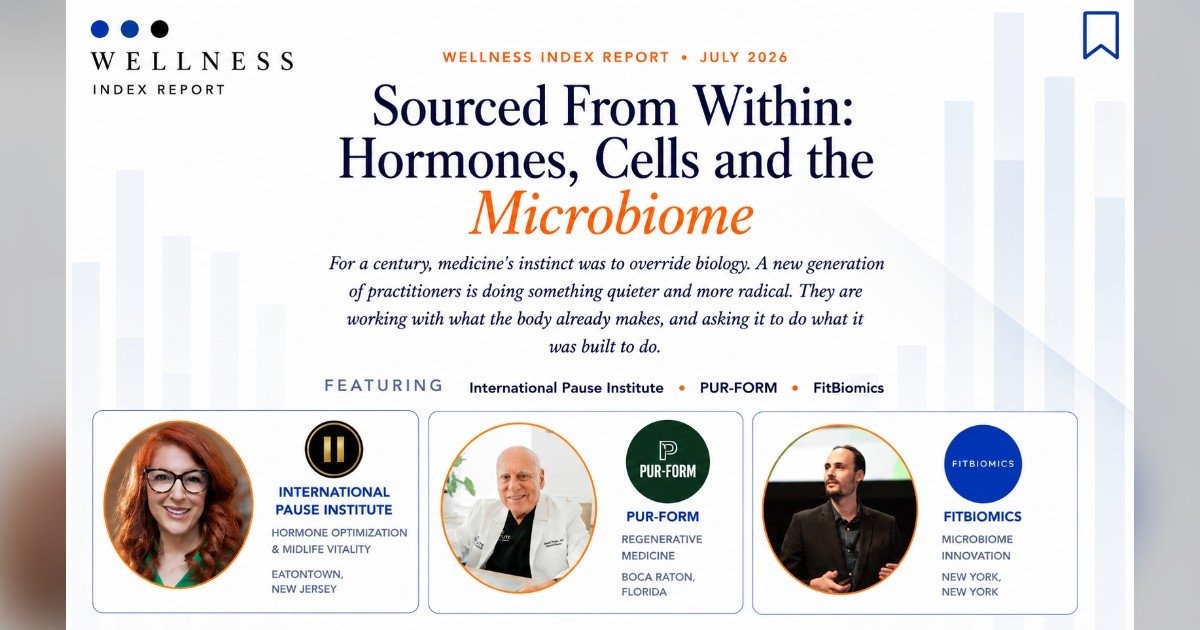
The July Wellness Index Report, published by Wellness Eternal's Biohacking Index, identifies a quiet reversal in how leading practitioners approach longevity. For a century, medicine's instinct was to override biology. A new generation is working with what the body already produces and asking it to do what it was built to do.
The report highlights three key signals driving this shift. First, midlife hormone health is moving into legitimate clinical priority, recognizing that hormones play a critical role in aging and overall well-being. Second, regeneration is replacing repair as the goal of many therapies, focusing on restoring function rather than simply patching damage. Third, the microbiome category is being reshaped by published evidence, emphasizing the importance of gut health in systemic wellness.
Among the companies exemplifying this shift are the International Pause Institute, PUR-FORM, and FitBiomics. These organizations are at the forefront of developing protocols and products that align with the body's natural mechanisms.
This change in perspective has significant implications for the wellness industry. It suggests a move away from aggressive interventions and toward more sustainable, biology-friendly approaches. For consumers, this means more options that support long-term health rather than quick fixes. For practitioners, it signals a need to understand and leverage the body's innate capabilities.
The Wellness Index Report is an independent, practitioner-led research platform published monthly by Wellness Eternal. It evaluates wellness providers, technologies, and protocols through a four-step process: expert nomination, customer and patient feedback, clinical review, and ongoing rating analysis. The report is distributed across major media outlets and reaches a global audience, providing visibility to solutions that meet its integrity-first standard.
As the field of longevity evolves, this report underscores the importance of aligning with biology rather than fighting it. The implications are profound, potentially changing how we approach aging, disease prevention, and overall health optimization.