

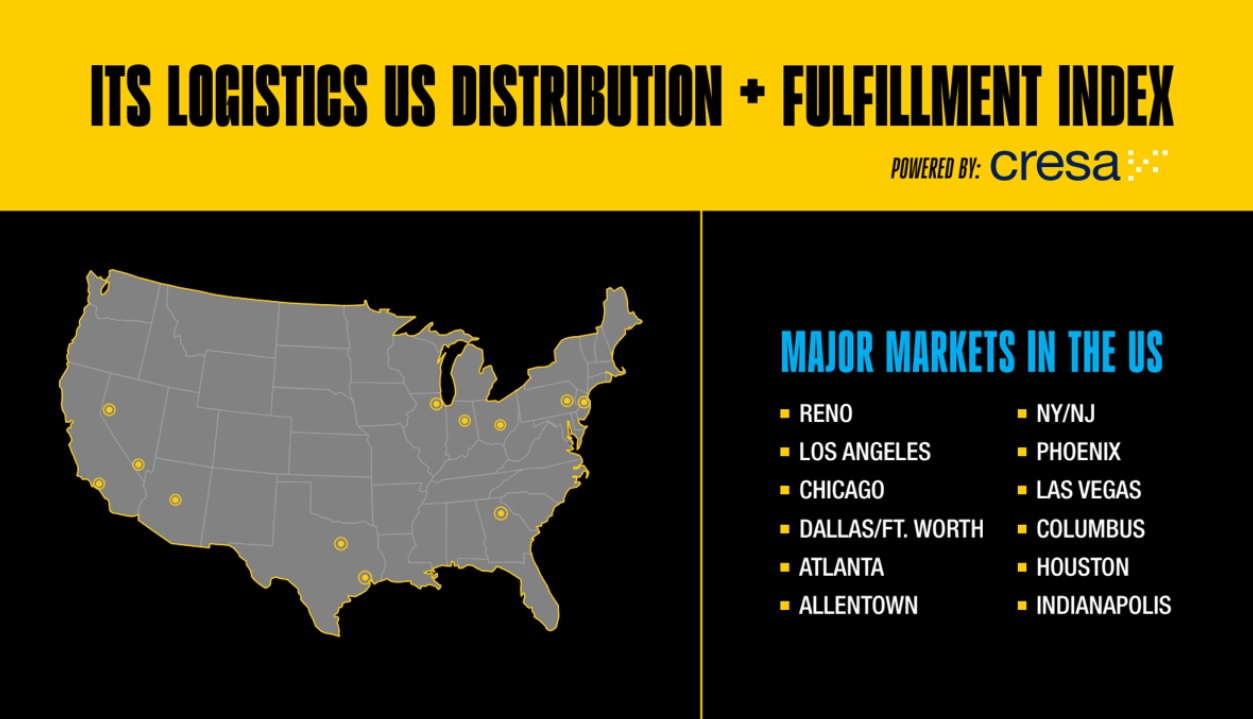
The Q2 2025 ITS Logistics US Distribution and Fulfillment Index, released today by ITS Logistics and powered by Cresa, highlights a market recalibrating under the pressure of high vacancy rates and tightening functional warehouse space. Vacancy rates have climbed to 7.1%, the highest since 2014, even as warehousing capacity contracted for the first time in more than a year. According to the index, the supply of truly functional, operationally ready warehouse space is tightening for shippers, retailers, and logistics providers heading into the second half of 2025.
Tariff-driven frontloading activity continues to influence inventory strategy for shippers of all sizes. Inventory costs surged to 80.9 on the Logistics Manager Index — the highest in over two years — driven by elevated labor, storage, and insurance expenses. Meanwhile, the Producer Price Index for Warehousing and Storage fell 5.1% from March, reflecting softened pricing power for warehouse operators. Consumer sentiment rose 16% in June, signaling cautious optimism amid stabilizing economic conditions.
“Shippers and logistics providers who act now to secure operationally viable space will be best positioned as we move into 2026 and beyond,” said Ryan Martin, President of Distribution and Fulfillment at ITS Logistics. “The pressure on capacity and costs is expected to intensify with seasonal inventory builds and consumer demand later this year. The greatest challenge we see when it comes to the real estate market is that costs continue to remain high, while brands face too many unknown variables in the economy and consumer spending. This is going to impact overall building absorption rates this year and next.”
The index findings align with broader industrial market trends. According to Cushman & Wakefield’s Q2 2025 U.S. Industrial Market Report, national net absorption held steady at 29.6 million square feet, while new completions dropped to a five-year low of 71.5 million square feet — down 45% year-over-year. Vacancy rose above 7% for the first time since 2014, and average asking rents increased just 2.6% year-over-year, the slowest growth since early 2020. A recent Wall Street Journal article also confirmed that warehouse vacancy levels have reached their highest point in more than a decade, with much of today’s available space being either outdated or poorly located for modern supply chain needs.
The Logistics Manager Index averaged 59.4 in the second quarter, indicating a steady pace of continued expansion. Warehousing capacity fell to 47.8 in June, its first contraction since early 2023, while utilization remained strong at 62.2. Warehousing prices held at an elevated 68.3, driven by demand for well-located, high-efficiency space.
Following tariff-driven stockpiling surges in the first half of 2025, inventory levels are beginning to normalize, with larger shippers continuing to hold buffer stock while small and mid-market firms switch to leaner inventory models. As a result, downstream inventory readings dropped, indicating a significant decrease in import volumes and reduced activity at fulfillment and retail nodes.
Additional highlights from the Q2 2025 Index include: U.S. goods imports fell nearly 20% month over month in April, the largest single-month drop since 1992; average warehouse wages now exceed $19 an hour, up 40% to 50% over the past five years, driving increased interest in automation; and core markets, including Dallas-Fort Worth, Chicago, and New York/New Jersey, posted steady rent growth despite elevated vacancy rates.
