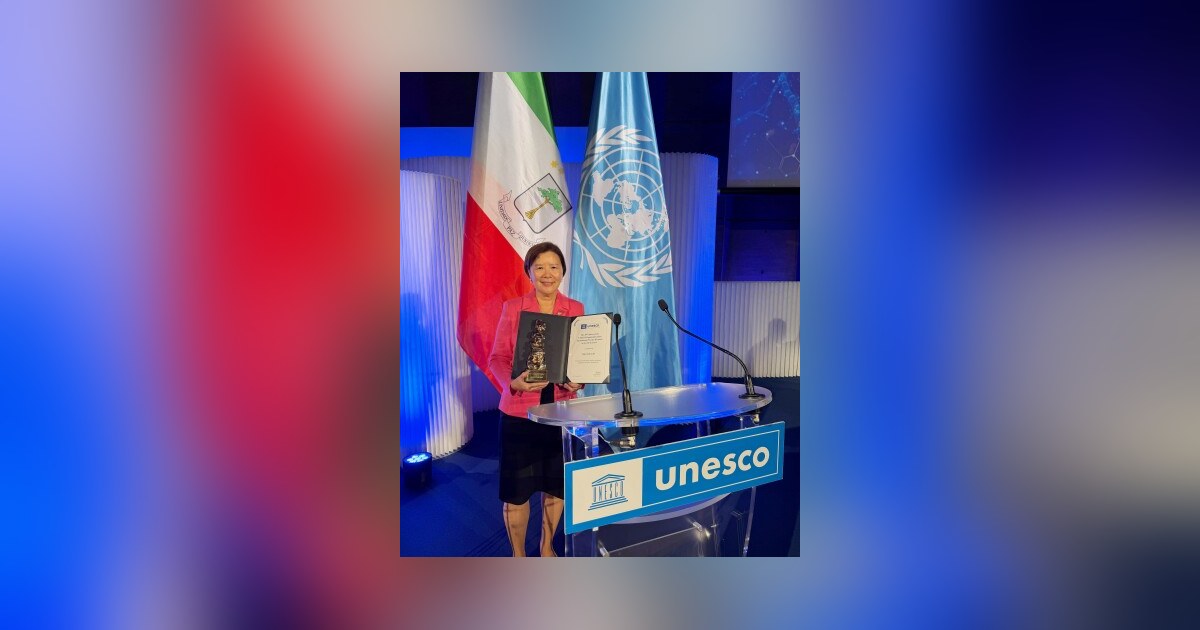
The award of the 2026 UNESCO-Equatorial Guinea International Prize for Research in the Life Sciences to Prof. Nancy Ip, President of The Hong Kong University of Science and Technology (HKUST), underscores the growing recognition of neuroscience research that addresses one of the world's most pressing health challenges: Alzheimer's disease. The prize, presented at UNESCO Headquarters in Paris on November 6, honors Prof. Ip's pioneering contributions to understanding brain function and neurodegenerative disorders, with implications that extend from the laboratory to community healthcare settings.
UNESCO cited Prof. Ip's team for discovering novel biomarkers and genetic risk factors for Alzheimer's, developing an innovative blood-based diagnostic technology for earlier detection and monitoring, and advancing gene therapy research that opens new avenues for prevention and treatment. These achievements matter because Alzheimer's disease affects millions worldwide, yet early diagnosis remains difficult and therapeutic options are limited. A minimally invasive, highly accurate blood test that can identify mild cognitive impairment could enable timely clinical assessment and intervention planning, and streamline the identification of suitable participants for clinical trials.
A critical aspect of Prof. Ip's work is its focus on Asian populations, which have historically been underrepresented in Alzheimer's research. Her team established a large-scale Chinese Alzheimer's disease biobank integrating clinical, neuroimaging, and multi-omics data, leading to the identification of genetic risk factors prevalent among Chinese individuals. This addresses a significant gap in global precision medicine, where data from Western populations have dominated. The findings provide insights into disease mechanisms and lay the foundation for diagnostic and therapeutic strategies tailored to Asian populations.
The blood-based diagnostic technology has already been adopted by multiple healthcare institutions in Hong Kong and expanded into community settings, helping to inform more effective disease management and risk-reduction strategies. Meanwhile, the team is exploring novel gene therapy approaches for familial Alzheimer's disease using gene-editing technologies, aiming to build an integrated pipeline from early diagnosis to next-generation therapeutics. Such translation from bench to bedside is central to the prize's mission of advancing human health and improving quality of life.
Prof. Ip emphasized the importance of global scientific collaboration and nurturing future researchers. "Science is a collective endeavor," she said. "Every breakthrough is built on collaboration across disciplines, institutions and borders." As a scientist and university president at HKUST, she has advocated giving young researchers the freedom to pursue curiosity and the confidence to take intellectual risks. Her leadership extends beyond the lab: she is an elected member of the Chinese Academy of Sciences, the US National Academy of Sciences, and other leading academies, and has received numerous honors including the L'Oréal-UNESCO For Women in Science Award.
The UNESCO-Equatorial Guinea International Prize, established to recognize outstanding scientific achievements that advance human health, this year is shared by three laureates who jointly receive US$300,000 and an Integración Tribal statuette. For Hong Kong's research ecosystem, the award signals international validation of local science and may bolster efforts to attract talent and investment in biomedical innovation. It also reinforces the role of academic institutions in tackling global health challenges through cross-border partnerships, as reported by Media OutReach Newswire.