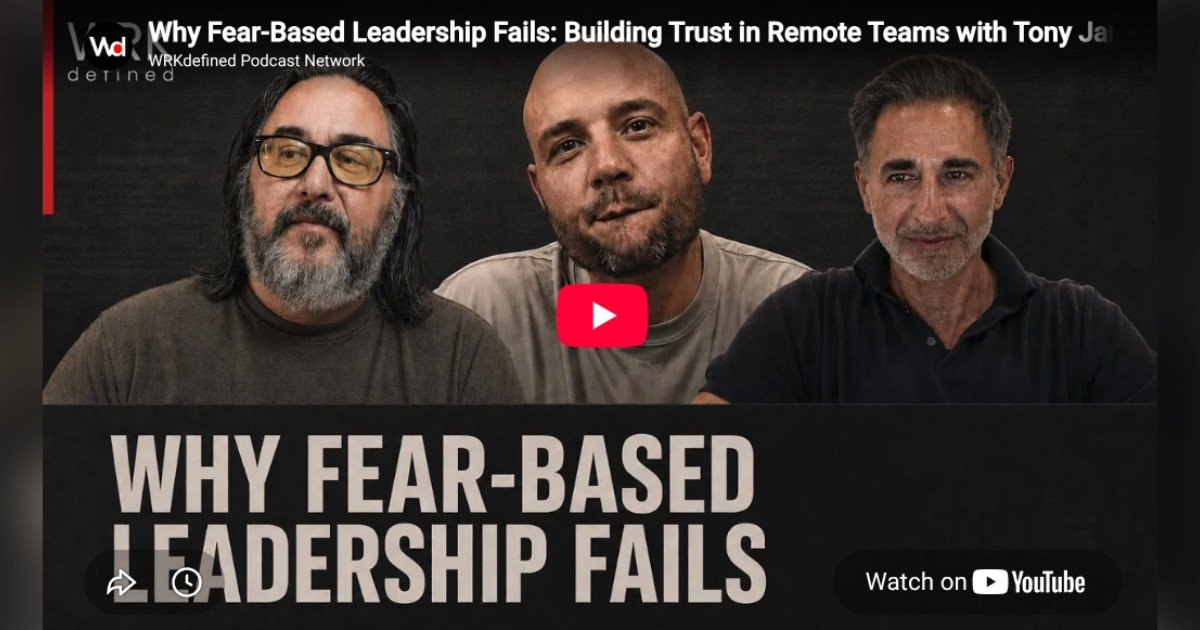
In a recent episode of the podcast You Should Know, Oyster founder and Executive Chairman Tony Jamous made a compelling case that fear-based leadership is a silent killer of organizational health, particularly in the era of remote and distributed work. The episode, titled Why Fear-Based Leadership Fails: Building Trust in Remote Teams with Tony Jamous, was hosted by William Tincup and Ryan Leary and aired on August 18, 2026. Jamous, speaking from Cyprus, argued that surveillance, reactivity, and command-and-control instincts are not strategic choices but manifestations of fear that are increasingly incompatible with a global workforce.
Jamous pointed to the cyclical nature of leadership styles, noting that as interest rates rose and demand slowed, many executives have reverted to traditional, control-heavy approaches. He contends this pendulum swing is a reaction to anxiety rather than a thoughtful strategy. In contrast, he advocates for a trust-first model, which Oyster, a benefit corporation operating across more than 80 countries, has embraced. Remote work, he argues, forces organizations to build trust because direct oversight is impossible. He outlined a three-part method for shifting from control to trust: defaulting to best intent, practicing non-reactivity, and releasing the illusion of control.
The conversation also delved into the psychological drivers of executive behavior. Jamous stated, "One of the most damaging stories leaders tell themselves is that if they missed the quarter or the year, they're going to die," framing Wall Street pressure as a wiring problem rather than a business reality. He emphasized that leaders have 100% control over their own behavior at the top, and they must default to assuming best intent. This philosophy was shaped by his personal journey from leading his first unicorn to his current role at Oyster, which he described as a process of "ego reduction." He credited a pivotal observation from leadership coach Pascal, who noted that after the first exit, the same outcome could have been achieved with less tax on himself and those around him.
The episode also touched on practical implications, including Oyster's launch of its Global Payroll product and a Silver Lake-led funding round closed in the third quarter of the prior year. Jamous shared a moving story about an Oyster teammate in the Philippines who broke down when she realized she was trusted, illustrating the emotional impact of trust-based management. He also discussed the concept of a "clean company" vibrating at high trust, and revisited Oyster's mission to reverse brain drain and reduce wealth inequality by democratizing access to global job opportunities.
This episode is particularly important because it challenges the prevailing narrative that tight control is necessary for performance, offering a counterintuitive but evidence-informed approach that aligns with the realities of modern work. As remote and hybrid models become the norm, leaders seeking sustainable success would do well to heed Jamous's warning that fear, not strategy, is often at the helm.