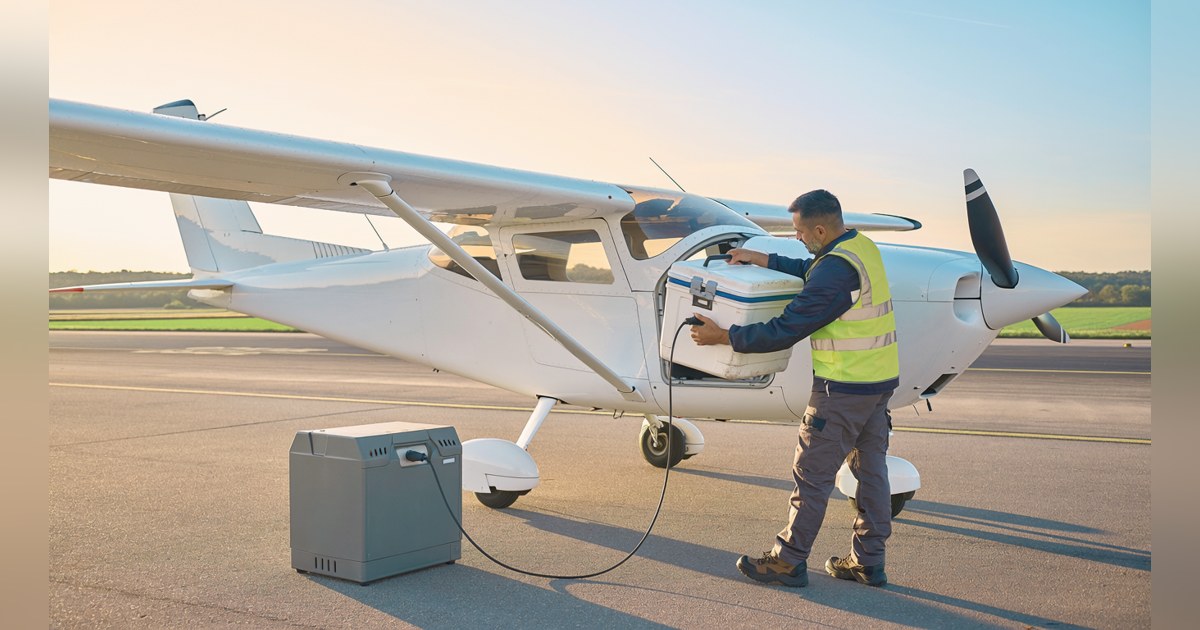
When the Federal Aviation Administration named the eight projects for its eVTOL Integration Pilot Program (eIPP), public attention gravitated toward the prospect of passenger air taxis over Manhattan. However, the projects themselves and the stakeholders involved indicate a different starting point. The first commercial operations in advanced air mobility are poised to carry medical supplies, freight, and emergency responders before they carry commuters. This sequence carries significant implications for infrastructure development, investment, and the communities that stand to benefit earliest.
Lisa Wright, founder and CEO of Landings, has tracked the program closely and attended a recent meeting of the Port Authority of New York and New Jersey, one of the selected participants. Her observations challenge the dominant narrative. "The reality is, first use cases are medical and logistics, and freight," Wright said. "There's a lot more conversation around drones and heavy drones and shipping logistics and emergency services than I had expected, given the headline." This gap between public perception and operational reality suggests that the industry's most immediate impacts will be felt in sectors far from urban rooftops.
The eight selected projects include state and regional participants such as the Florida Department of Transportation and the Port Authority of New York and New Jersey. The manufacturers named are Archer, Beta, Joby, Electra, Wisk, Ampaire, Elroy Air, and Reliable Robotics. The mix is telling: alongside passenger eVTOL developers, the list includes cargo and automation-focused companies such as Elroy Air and Reliable Robotics. The program is testing a much wider range of operations than passenger service alone, signaling that the FAA and its partners are laying groundwork for a diverse set of missions.
One manufacturer, Beta Technologies, appears in seven of the eight projects. Wright attributes that reach to the company's breadth across electrification rather than to any single product. "Beta has done a great job of being involved on many levels of electrification," she said. "They've installed over 40 chargers at regional airports in many of these states now, so they're ahead on the charging part." She also points to flight experience: in her view, Beta's conventional fixed-wing electric aircraft has logged more miles than any other electric aircraft in the group. The fixed-wing design matters practically, as conventional aircraft can use runways at existing regional airports, while vertical takeoff aircraft depend on vertiports that are still largely being planned. Beta also unveiled a heavy drone aimed at government and military customers at the Farnborough International Airshow this summer.
Geography may play a role too. Beta is based in Vermont, "so they are by nature not necessarily urban," Wright said. "I think they've looked at a lot of the other use cases and started to build products, whether it's a drone or a charger, that were very applicable to whatever the use case of that program was." Other manufacturers have chosen a different focus. Joby, for example, is currently concentrated on urban passenger service. Both approaches serve real markets; they are simply arriving on different timelines.
The Port Authority discussion reflected activity already under way in the region. Wright noted that drone services are launching out of Brooklyn and New Jersey. Elsewhere, North Carolina is using Pivotal aircraft for emergency responder services, relying on a lighter aircraft category that does not follow the same certification path as passenger eVTOLs. These operations have different infrastructure needs than air taxis. They need charging where cargo and responders actually move, which often means regional airports, rural hubs, and emergency service facilities rather than downtown rooftops. Their schedules follow deliveries and emergency calls, not commuter peaks.
For communities outside major metros, the order of arrival changes the calculation. Rural regions rarely have the passenger density to support frequent air taxi routes. They often do have pressing needs for medical access, freight, and emergency response across distances that roads serve poorly. Wright frames infrastructure around use cases rather than aircraft models. Sites designed for multiple aircraft types and uses can serve drones, cargo aircraft, and eventually passenger eVTOLs from the same location. Early cargo and medical flights then do not lock a site into a single purpose.
The passenger air taxi remains the most visible symbol of the industry. The program's first results, however, are likely to be measured by something less visible: whether medical supplies, freight, and emergency teams move faster than they did before. That outcome would validate an infrastructure-first approach and bring tangible benefits to regions that have long been underserved by traditional aviation.