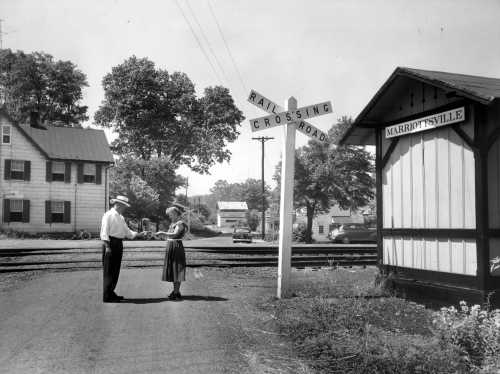
A. Aubrey Bodine's 1952 photograph of B & O Railroad employees John H. Lindsay and Barbara M. Gates illustrates the artist's unique blend of documentation and pictorialism. The image, part of Bodine's extensive body of work, captures the division engineer and express agent at Marriotsville, with Gates holding the key to the express shed. This photograph exemplifies Bodine's ability to transform everyday scenes into art through careful composition and technical manipulation.
Bodine, who worked for the Baltimore Sunday Sun from 1923 until his death in 1970, traveled throughout Maryland documenting diverse occupations and activities. His pictures, exhibited globally and awarded top honors, elevated newspaper photography to an art form. He studied at the Maryland Institute College of Art and believed photography could be a creative discipline, using tools like dyes, intensifiers, and even scraping to achieve desired effects. As he stated, he did not take a picture but made one, selecting features that suited his sense of mood, proportion, and design.
The significance of this photograph extends beyond its historical content. It represents Bodine's legacy as one of the twentieth century's finest pictorialists. His work, including this 1952 image, is preserved and accessible through the website www.aaubreybodine.com, where over 6,000 photographs spanning his 47-year career are available for viewing and purchase as reprints and note cards. The site also features a biography by his editor and closest friend, Harold A. Williams, providing deeper insight into Bodine's life and techniques.
This photograph matters because it captures a moment in American railroad history while showcasing Bodine's artistic mastery. For historians, it offers a glimpse into mid-20th century transportation and rural life. For art enthusiasts, it demonstrates how Bodine's technical innovations—such as adding clouds photographically—created images that transcend mere documentation. The preservation and online availability of his work ensure that future generations can appreciate his contributions to both journalism and fine art.
Bodine's approach, combining documentary accuracy with artistic expression, remains influential. His photographs continue to be studied and admired, reminding us that even routine subjects can become timeless works of art. The B & O Railroad image, with its human element and meticulous composition, is a testament to his enduring legacy.